
***This post contains SPOILERS, so be forewarned.***
The late-90’s was the time for movies about career disillusionment. Box office darlings such as Office Space (1999), American Beauty (1999), and Fight Club (1999) all featured main characters worn cynical by their soul-sucking 9-5. But unlike planting a computer virus to embezzle money from the company or an elaborate scheme to clear everyone’s debt records, Clockwatchers (1997) provides more of an empathetic show of solidarity as opposed to fantastical catharsis.
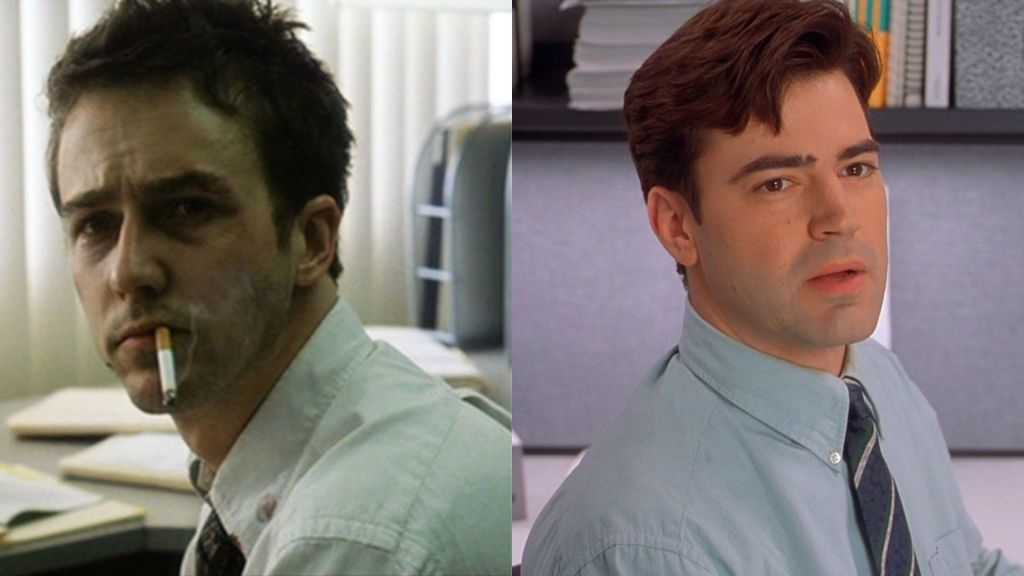
Both images via 20th Century Fox.
Of course, the Jill Sprecher-directed comedy didn’t quite reach the same level of notoriety or success as its younger cubicle cohorts of ‘99. In fact, I had only heard of the film’s existence a few short months before watching it on a whim one random weeknight. So in case you are unfamiliar like I once was, allow me to fill you in…
Clockwatchers stars Toni Collette as Iris, a mild-mannered temp worker hired to fill in at credit card company Global Credit. She joins fellow temps Margaret (Parker Posey), the office’s resident enfant terrible, flighty aspiring actress Paula (Lisa Kudrow), and naive Jane (Alanna Ubach), who is engaged to a rich, generous, but possibly adulterous man. (If you’re anything like me, the cast alone will convince you to watch this movie.) Trouble and jealousy arise when the temps are overlooked for an executive assessment position, and the role is given to a quiet, mousy external candidate named Cleo. Coincidentally, small items around the office start going missing, leading the staff to believe an office thief is on the loose.
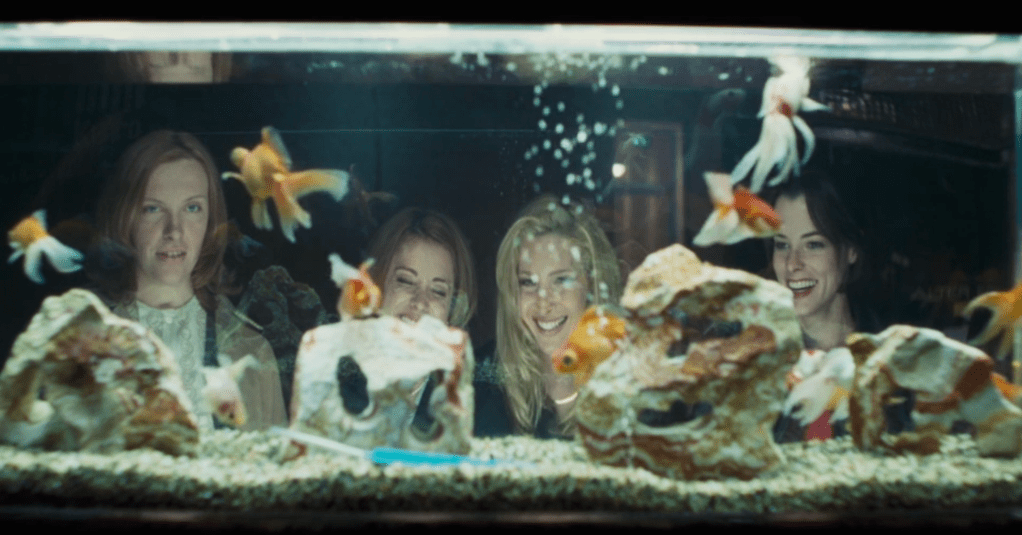
Image via BMG Independents.
Although officially a US production, the film was initially released in Collette’s native Australia circa 1997, and then Stateside the following year. Much like how Australia’s almost always a day ahead of those in the Western hemisphere, the country seemed to get an exclusive sneak-peek of the late-90s corporate malaise movie trend that was to come.
What director Jill Sprecher – who co-wrote the film with her sister Karen – captured so perfectly was those intense, often short-lived bonds you form with coworkers at that one particularly shitty, stressful job in your 20s. Shortly after Iris begins at Global Credit, she quickly forms a friendship with the other temps. Over lunchtime cafeteria kvetches, late-night happy hours, and clandestine hangouts in the bathroom, Iris (and, in turn, the audience,) is introduced to the hopes, dreams, fears, and general grievances of her colleagues. Paula, as mentioned earlier, aspires to become an actress, often going on about auditions and rehearsals that may or may not actually be happening. Jane gushes over her affluent fiancé, who the others suspect is giving her gifts to distract from his controlling behavior and rumored infidelity. Margaret – the charismatic leader, of sorts – gets her kicks teasing the stationery manager and testing the boundaries of her cubicle prison. Meanwhile, she longs for a glowing letter of recommendation that will take her to bigger, better, and perhaps more permanent things.
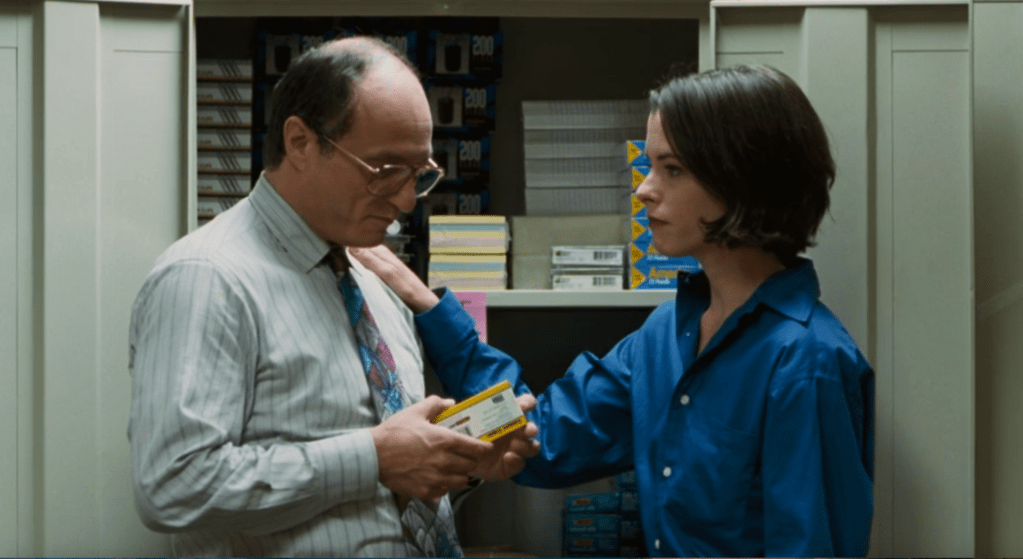
Image via BMG Independents.
The dynamic between these characters reminds me of my own workplace experience throughout my 20s. I spent the majority of the decade teaching English abroad, and for three of those years I taught elementary and middle school students in South Korea. During my first contract year, I worked at a hagwon in Gwangju, Jeollanam-do as one of several native teachers from across the English-speaking world. As is typical for a hagwon contract, the school flew us out and set us each up in our own studio apartments. In this case, most of us were housed in one of two buildings within walking distance of the school. As far as teaching jobs in hagwons, it was one of the more rigorous ones, so camaraderie amongst our fellow foreign teachers was key. Also, with Gwangju being a considerably smaller city – and hardly any of us able to speak Korean beyond ordering food and telling a cab driver where to go – we quickly built a fairly insular community amongst ourselves. Much like students at a boarding school or college kids in a small town, we would stop by each others’ apartments or “dorm rooms” after work to yap, laugh, and bitch about our day. Although we did branch out and meet other foreigners in town during the weekend, we remained close-knit during the week.

Image via center4mediarts.com
Like the temps of Global Credit, my fellow teachers and I became fast friends. The trajectory of acquaintance to BFF in my experience, however, was perhaps a little too accelerated. One of my coworkers Sophie*, who was nearing the end of her contract, had begun training her replacement, fresh off the Asiana flight from Toronto. Before the new hire even fully recovered from jet lag, they were kiki-ing like old friends in Sophie’s apartment. Sounds wholesome, until you remember that it happened as Sophie was taking a dump in the bathroom, door ajar so they could keep happily yapping uninterrupted.
My own introduction to the crowd was both memorable and eye-opening. I had arrived in Gwangju on Saturday night, and was given the morning and afternoon the next day to get adjusted to the time difference. On Sunday evening, Sophie knocked on my door and invited me to go meet some of the other teachers in Claire’s* apartment, located in the other building. We simply hung around, discussing topics ranging from work to all the spicy hook-ups they’d encountered since coming to Korea. (I’ll save the juicy details for another piece.) We had even booked a girls’ trip to Busan with the rest of the female native teachers for the following weekend. Right away I was charmed by their candor and colorful anecdotes. So it didn’t take long at all for me to feel comfortable around them.
But aside from everyone’s exciting sexual exploits and deciding which Haeundae Beach hostel to book, I had also learned what else they had on the horizon once they completed their contracts. Sophie had an au pair gig lined up in Amsterdam. Claire landed a job as a personal assistant in Australia. Laura* planned on traveling around Asia for as long as she could until maybe grad school or another teaching position in Central or South America. They all spoke radiantly of their soon-to-come futures – all within arm’s reach as they sat waiting, watching the calendar until their last day.
Again, the similarities between this group of young female professionals and those depicted in Clockwatchers are not lost on me. In both the movie and my experience, all the young women lied waiting for something great to happen on the other side of their crummy, temporary job.
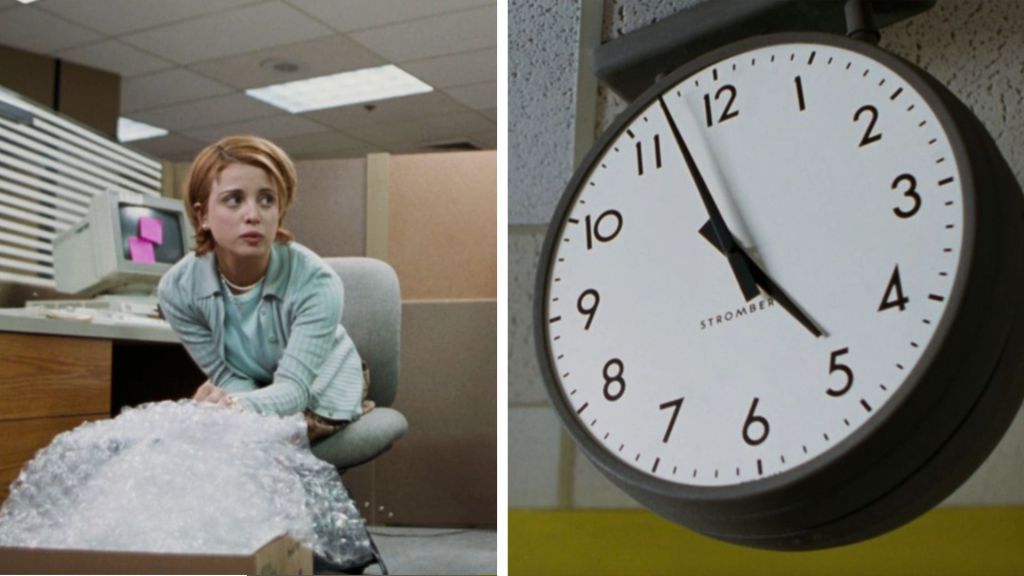
Image via BMG Independents.
Spending each hour, minute, second watching the clock, waiting for the work day to end and life to begin. Much like how Jane would sit and admire her engagement ring and all the other gifts from her fiancé, Sophie changed her computer desktop background to an Amsterdam canal to psych herself up for her next adventure. Claire would enthuse about her future life in Australia, just as Margaret hoped for that golden letter of recommendation. Laura would daydream about eating fresh fruit on the beach in Thailand, while Paula maintained her lofty visions of fame and stardom. Another – perhaps innocuous detail that stood out to me was the trends of the mid-2010s, (when I was in Gwangju,) were cycling back to the mid-90s. It’s astonishing how many fitted turtlenecks, A-line skirts, and opaque tights in the movie could be interchanged with my work wardrobe circa 2016.

Image via BMG Independents.
Coordinating fashions aside, however, unlike my own experience the Clockwatchers are driven apart by the office thefts. Due to their outsider status, the temps – especially Margaret – become the main suspects in the ongoing investigation. As a means to try and catch one of them in the act, the powers that be move their desks to the center of the office, putting them on display in front of an entire workforce of judging eyes. The situation puts a strain on their friendship, particularly when Iris discovers her missing monkey trinket – a sentimental souvenir that came with a cocktail she had on their first night out together – in Margaret’s desk. To protest, Margaret suggests that they go on a one-day strike. But when the other temps show up to work anyway, Margaret is swiftly fired and escorted out by office security the next day. Shortly after, Iris realizes that Margaret didn’t, in fact, steal her trinket after finding an identical one in her own desk.
The friendships quickly dissolve once Margaret is sacked, followed by Jane leaving the company for wedded life and Paula going to a different department. Iris finds herself the only remaining temp left on her floor at Global Credit. What’s more, her notebook has gone missing. One day, she catches Cleo snatching an item from a senior executive’s desk. Iris follows Cleo home to discover she actually lives in a mansion.

Image via BMG Independents.
That is when Iris, tired of the wait-and-see, decides to get her notebook back by silently confronting Klepto Cleo via handwritten note. Cleo complies, and at lunch, Iris burns that very notebook in a wordless show of dominance. The next day, Cleo leaves a fresh, new notebook at Iris’ desk, with “I’m sorry” written on the first page.
No major explosion or dramatic, slow-motion beating of office equipment. But now, after learning how things really work, Iris has stopped “watching the clock” and sets out to get what she wants. When she does decide to leave the company, she asks a clueless executive to sign a pre-written letter of recommendation. It is soon revealed to contain Margaret’s name and accomplishments, which she then mails to her former friend and coworker.
While my own personal real-life counterpart to the Clockwatchers was dramatic in different ways, I still find it fittingly natural how each of my coworkers and those in the film moved on from their short-term gigs. Sophie returned to the United States once her au pair job ended, having grown disillusioned with life in the Netherlands. Jane eventually did get married and left the company. Claire’s Australia job fell through, leading her to take a teaching position in Seoul instead. Margaret was eventually fired for her no-show, no-call at work. Laura traveled around Asia for months, mainly in the warmer countries of the Southeast. Paula transferred to the accounting department.
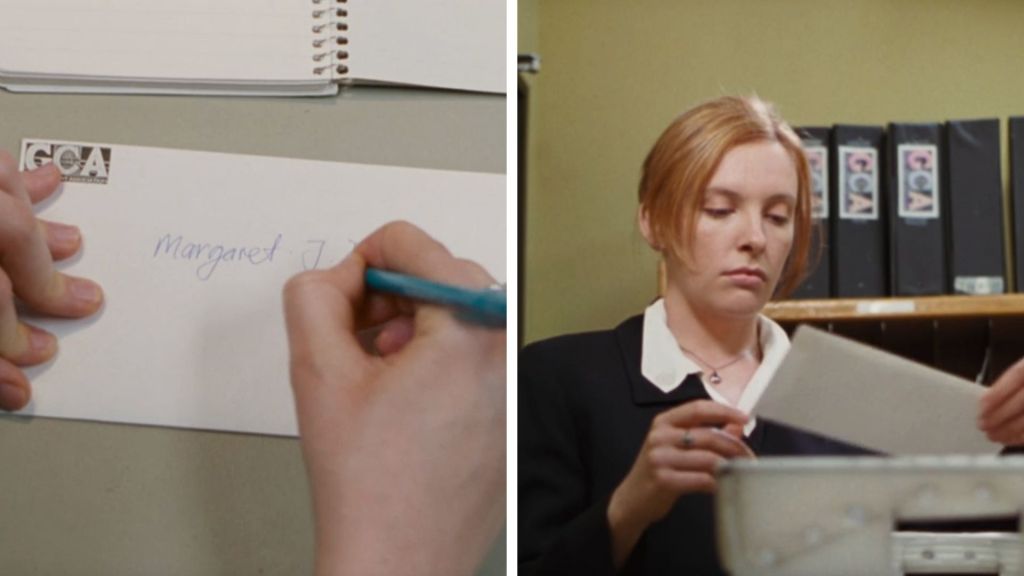
Image via BMG Independents.
No justified arrests, no satisfying explosions, no major deaths. Rather than go against the corporate powers that be, Iris chooses to lift herself and Margaret up in the face of a system designed to keep you down. Not to say that it’s anything better or worse than any other messages from films of the same ilk, but sometimes you’ve got to find the will within yourself to make a change, rather than wait around for it.
Perhaps Iris herself said it best:
“Everything is temporary. Everything begins and ends, and sometimes begins again. When I look ahead, I see endless possible futures, repeated like countless photocopies, a thousand blank pages. And in each one I see myself, never hiding, never sitting silently, and never just waiting and waiting, and watching the world go by.
Whatever took us away from that stressful job in Gwangju, I know we all at least left with positive letters of recommendation.
*Name changed for reasons you’ll understand in a few short moments.



 Souvenir Mug
Leave a comment